

You are using an out of date browser. It may not display this or other websites correctly.
You should upgrade or use an alternative browser.
You should upgrade or use an alternative browser.
Class/form horses
- Thread starter JennyK
- Start date

Sullybomb
Gelding
I don't know anything about VDW and don't claim to but, regards to the Ability Ratings list you provided, is there no recency bias applied to it? Annaaf for example, it's been a few years since he was winning good races consistently (he did win in October last year @ Ascot) which I'd imagine he'd be aimed at again this year. But there have been many a case of good horses winning races in their younger days but, then not performing anywhere near that level again?The Portland result shows that a consistent class/form horse can do well, but also the risk when in VDW terms there are so many better horses in the race; unsurprisingly one of them won.
Just asking...
Sul


JennyK
Gelding
My final working grid shows the ARs for the current year and 2025 and 2024 as well as the career ARs,
 Sullybomb, so I am very alive to the issue of whether a horse is still realistically worth his or her current career AR. The trouble today was of the ten "better" horses, from my point of view there were only recency question marks about three of them: Annaf, Atomic Force and, especially, Apollo One, which still left seven "better" horses whose AR ratings I would not question. But even with the three, there is the secondary issue of what assumption one makes.
Taking Annaf by way of example, his figure looks miles too high, but he won a class 482 less than a year ago, admittedly only a non-handicap. With Twilight Calls on 146 and Annaf's 1277, one would need to be very confident to adjust Annaf below 146. And if one works over too short a period the danger is that one is really assessing form and not ability.
Sullybomb, so I am very alive to the issue of whether a horse is still realistically worth his or her current career AR. The trouble today was of the ten "better" horses, from my point of view there were only recency question marks about three of them: Annaf, Atomic Force and, especially, Apollo One, which still left seven "better" horses whose AR ratings I would not question. But even with the three, there is the secondary issue of what assumption one makes. Taking Annaf by way of example, his figure looks miles too high, but he won a class 482 less than a year ago, admittedly only a non-handicap. With Twilight Calls on 146 and Annaf's 1277, one would need to be very confident to adjust Annaf below 146. And if one works over too short a period the danger is that one is really assessing form and not ability.

gerry
Mare
every thing you say there
 JennyK has merit but you could argue also that Annaf best ability was shown when beat in about three races all group 1 races so its not really ability rating its ability rating it can win at and if you take a way the million race in south africa its a 52 k race this actual race in 2023 but the winner air force one had won a 70k this year too better than anything annaf had won.
Some thing to look at.
JennyK has merit but you could argue also that Annaf best ability was shown when beat in about three races all group 1 races so its not really ability rating its ability rating it can win at and if you take a way the million race in south africa its a 52 k race this actual race in 2023 but the winner air force one had won a 70k this year too better than anything annaf had won.Some thing to look at.
JennyK
Gelding
Yes,
 gerry, but the dilemma, if as I do one finds VDW's ability ratings normally serviceable, is how to adjust one, like Annaf's, that looks out of line with its likely current ability. I have no problem in seeing it miles below 1277, but where, and in this race specifically where in relation to Twilight Calls'?
gerry, but the dilemma, if as I do one finds VDW's ability ratings normally serviceable, is how to adjust one, like Annaf's, that looks out of line with its likely current ability. I have no problem in seeing it miles below 1277, but where, and in this race specifically where in relation to Twilight Calls'?
gerry
Mare
Well if you go last two years or even go three and dismiss the south africa race completely i would, annaf run more won less than twilight calls if you go back four years now it changes in annaf favour ,but this is where do you say ability deminishes or it improves if you look at both those horses you clearly see at rpr they where better last year or year before then you look at the winner of todays race and it is rocketing up the rpr this year. the one that shocked the result was al shabab storm clearly would not have that to place in this but you will get shocks did look better horse last year and on all weather.

DuckandDive
Mare
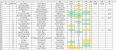
I actually showed data the other week that undeniably shows just using the last 2 wins is a more reliable guide than whole career.
And although still checking, I have yet to find a VDW example that wouldn’t still have been his selection if he’d just used the last 2 wins for the AR.
Maybe that wasn’t the case with other selections he never gave us, but it can’t be a coincidence that it still showed the class/form horses in his examples with the 2 win limit.
Makes sense too in my view. And perhaps 2 year time limit is sensible. Still covers Prominent King and others.
And although still checking, I have yet to find a VDW example that wouldn’t still have been his selection if he’d just used the last 2 wins for the AR.
Maybe that wasn’t the case with other selections he never gave us, but it can’t be a coincidence that it still showed the class/form horses in his examples with the 2 win limit.
Makes sense too in my view. And perhaps 2 year time limit is sensible. Still covers Prominent King and others.
That was a great pricebelieve it or not i got11/4 last night too

Graeme
Sire
T
Tufnel Was just getting a shopping list of things to consider on a model I am working on and this came up in support of what you just said on age of ratings - no data to support as just chewing the cud as it were:
Rating Decay: When is a Rating Too Old?
Ratings do not hold their value indefinitely. The predictive power of a rating operates on a strict decay curve based on the physical realities of the animal.- Peak Predictive Window: The most statistically accurate predictor of today's performance is a rating achieved within the last 30 to 45 days.
- The Flat Racing Cut-Off: In Flat racing, any rating older than 365 days (12 months) is generally considered statistically invalid as a primary data point. A horse's physical maturity, cardiovascular efficiency, and physiological health change significantly over a year. A peak rating from two years ago is historical trivia, not a reliable betting metric.
- The National Hunt (Jumps) Variance: Jumps horses mature later, run less frequently, and often target the exact same races year after year. While a 12-month cut-off is still a standard baseline, ratings up to 18 months old can occasionally retain statistical relevance, particularly if the horse is returning to a specific track and distance where it previously peaked.
- The 3-Year-Old Transition: Ratings achieved by a 2-year-old are notoriously unreliable when applied to their 3-year-old season. Horses physically develop at vastly different rates during the winter of their 2-year-old year, meaning a high rating from the previous autumn often fails to carry over to the spring.
gerry
Mare
I think the there to much put on the ability rating all we want to do say like big race like the portland today although hopefully easier races to do with but all the ratings do is say like all the rating you had is get rid of all the poor horses there
 DuckandDive had 3 of first four in top 7 horses so really trying to cut it down to a manageable amount to study. As you said
T
Tufnel mostly the last two races do that for you i think thats why he said better races i think so easy to see horses who have never done it we seen one today in big race of appelby had just won 7k novice now won the big one so these races must be left as where looking at the big handicaps worth money and form say 40k race just go through them kick out anything thats not i would not say win but run close in say 30k race thats the field split into ones that can win it and ones that could improve and win it. Now field down to manageable size if not cut the prize money or distance beat to get maybe 4 good size to know possible winners then from there its clean slate not this one is above this or vice versa and see what the race suits and if nothing sticks out its no bet or does its bet there no keeping using data to get to selection its pure form study, i think a lot could not saying would but could have ended up with winner today in portland. Just look at winner today was 52k had just won a 70k race same class clearly improving so was fair to say could handle the extra mark.
DuckandDive had 3 of first four in top 7 horses so really trying to cut it down to a manageable amount to study. As you said
T
Tufnel mostly the last two races do that for you i think thats why he said better races i think so easy to see horses who have never done it we seen one today in big race of appelby had just won 7k novice now won the big one so these races must be left as where looking at the big handicaps worth money and form say 40k race just go through them kick out anything thats not i would not say win but run close in say 30k race thats the field split into ones that can win it and ones that could improve and win it. Now field down to manageable size if not cut the prize money or distance beat to get maybe 4 good size to know possible winners then from there its clean slate not this one is above this or vice versa and see what the race suits and if nothing sticks out its no bet or does its bet there no keeping using data to get to selection its pure form study, i think a lot could not saying would but could have ended up with winner today in portland. Just look at winner today was 52k had just won a 70k race same class clearly improving so was fair to say could handle the extra mark.
DuckandDive had 3 of first four in top 7 horses so really trying to cut it down to a manageable amount to study. As you said
T
Tufnel mostly the last two races do that for you i think thats why he said better races i think so easy to see horses who have never done it we seen one today in big race of appelby had just won 7k novice now won the big one so these races must be left as where looking at the big handicaps worth money and form say 40k race just go through them kick out anything thats not i would not say win but run close in say 30k race thats the field split into ones that can win it and ones that could improve and win it. Now field down to manageable size if not cut the prize money or distance beat to get maybe 4 good size to know possible winners then from there its clean slate not this one is above this or vice versa and see what the race suits and if nothing sticks out its no bet or does its bet there no keeping using data to get to selection its pure form study, i think a lot could not saying would but could have ended up with winner today in portland. Just look at winner today was 52k had just won a 70k race same class clearly improving so was fair to say could handle the extra mark.I certainly gave Airforce One a good look. The win at York was very comprehensive and finally this year he has started to deliver in better races. End of the day I tried to stick with the group races which was a major mistake. Too many races some days and a pile of crap on so many others.I think the there to much put on the ability rating all we want to do say like big race like the portland today although hopefully easier races to do with but all the ratings do is say like all the rating you had is get rid of all the poor horses there
gerry
Mare
I found group races done two things i didnt like foreign fields and short prices i think there not suited to good form reading and the smaller class its hard some time to eliminate field leaves the midclass as the perfect point as usually half the field have never reached the height there in so thats good to get rid of plenty poor horses, How do we get the perfect horse in the race its never easy or racing would be finished i think he said hard work but it could be simple study form.

Leodis
Gelding
I have built a decay model in AI for excel. Will post it indoors over the next few daysT Tufnel Was just getting a shopping list of things to consider on a model I am working on and this came up in support of what you just said on age of ratings - no data to support as just chewing the cud as it were:
Rating Decay: When is a Rating Too Old?
Ratings do not hold their value indefinitely. The predictive power of a rating operates on a strict decay curve based on the physical realities of the animal.
- Peak Predictive Window: The most statistically accurate predictor of today's performance is a rating achieved within the last 30 to 45 days.
- The Flat Racing Cut-Off: In Flat racing, any rating older than 365 days (12 months) is generally considered statistically invalid as a primary data point. A horse's physical maturity, cardiovascular efficiency, and physiological health change significantly over a year. A peak rating from two years ago is historical trivia, not a reliable betting metric.
- The National Hunt (Jumps) Variance: Jumps horses mature later, run less frequently, and often target the exact same races year after year. While a 12-month cut-off is still a standard baseline, ratings up to 18 months old can occasionally retain statistical relevance, particularly if the horse is returning to a specific track and distance where it previously peaked.
- The 3-Year-Old Transition: Ratings achieved by a 2-year-old are notoriously unreliable when applied to their 3-year-old season. Horses physically develop at vastly different rates during the winter of their 2-year-old year, meaning a high rating from the previous autumn often fails to carry over to the spring.
Graeme
Sire
That will be interesting to see - thank youI have built a decay model in AI for excel. Will post it indoors over the next few days
Leodis
Gelding
I am interested in doing something similar with OR's. Do you use regression at all?My own approach to ability suggests not very likely at all, as illustrated by the attached chart.