• Hi Guest Just in case you were not aware I wanted to highlight that you can now get a free 7 day trial of Horseracebase here.
    We have a lot of members who are existing users of Horseracebase so help is always available if needed, as well as dedicated section of the fourm here.
    Best Wishes
    AR

Apprentice weight in Hcap

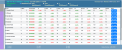
This is the night-before output, and the important point is that it isn’t simply trying to identify “good trainers” or “bad trainers”.

It is looking for trainer behaviour in the context of the race.

So in this Nottingham race, Joey Ramsden comes out Rank 1 with Pleasant Man at 11.19%, narrowly ahead of John & Rhys Flint on 11.05% and James Fanshawe on 10.64%.

That ranking is built from the trainer’s historical behaviour across a range of relevant circumstances, rather than one isolated statistic. The idea is to ask: given the type of horse, race and situation, which trainers have historically behaved most strongly in circumstances like these?

The percentage is then normalised within the race, so the field adds up to 100%. That lets me compare every trainer against the others in that particular race, rather than looking at them in isolation.

The Bet365 column is useful because it gives me a completely separate market view. For example, Pleasant Man was 17.00, which is an implied probability of only 5.88%, while the trainer model had him at 11.19%. So the trainer signal was materially stronger than the early market view.

What interests me next is what happens between the night-before price and race time. If a horse with a strong trainer-behaviour signal is then backed, that may be telling us something different from one that drifts badly.

So I’m not using this as a stand-alone betting system. The night-before model is effectively giving me a behavioural benchmark, and then I can watch how the market reacts to that benchmark the following day.

That is where I think it becomes especially interesting: trainer behaviour first, market behaviour second, with the two kept separate so I can see when they agree or disagree.
Also keep an eye on those that are ranked low but get backed
 
I am sorry Gerry it does not prove anything, its anecdotal and Dayjur was not a handicapper
yes it does prove that picking horses by size wont win you money form will win you money nothing else and i never said he was a handicaper i am well aware of all horses who have run in past where they ran what they liked types of races they run in how good they where.
I was showing a point nothing more that small horses can win elite races and now tell me they cant go on say they cant you moron.
 
Are you using KNN to evaluate the trainers
No, I’m not using KNN to evaluate the trainers.
I’m using a supervised model to learn trainer behaviour from a fairly large set of trainer/race-context features, then ranking and normalising the output within each race.
The main issue I’m trying to deal with is that trainer data can get very sparse very quickly once you start slicing it too finely, so I’m not relying on nearest-neighbour matching of a few similar historical cases.
I’m more interested in whether a trainer’s behaviour is consistently informative across several related circumstances, while controlling for sample size, recency and changing behaviour over time.
I’ve kept the exact feature construction fairly close to my chest for now, but the output is designed to give me a night-before trainer-behaviour signal that I can then compare with what the market does the following day.
 
Also keep an eye on those that are ranked low but get backed
Yes, definitely. I think that could be just as interesting as the obvious top-ranked horses.
If the model has a trainer relatively low in the race but the horse is then strongly backed, that is potentially telling us the market knows something the historical trainer-behaviour signal hasn’t captured.
So I want to look at it both ways:
  • high trainer rank + market support
  • low trainer rank + significant market support
The second group could be particularly useful because it may highlight changes in trainer behaviour, stable intent, or situations where the historical pattern is becoming stale.
I’m trying to keep the trainer model and the market movement independent initially, then see where they confirm each other and where they conflict.
 
yes it does prove that picking horses by size wont win you money form will win you money nothing else and i never said he was a handicaper i am well aware of all horses who have run in past where they ran what they liked types of races they run in how good they where.
I was showing a point nothing more that small horses can win elite races and now tell me they cant go on say they cant you moron.
Gerry I would never dream of saying small horses cannot win class races mainly because I do not deal in absolutes in fact I am not really interested in how often they win but more how we bet them. Bit of advice don't call people moron on here I am guessing it results in a 78.2% chance of a ban
 
Yes, I already capture the bookmaker journey separately — night before, 8am and 10am. So I can freeze the trainer ranking the night before and then measure how the market behaves afterwards. That should let me look at both confirmation — highly ranked trainers getting backed — and contradiction, where a low-ranked trainer horse is strongly supported by the market. The latter may be just as interesting.
 
Mark, keep an eye out for posts from ARAZI91 and have a dig back through some of his older stuff when you get chance.
He’s up there with the best I’ve come across in terms of depth of knowledge and the way he thinks about racing data, modelling and markets. Even when you don’t agree with everything, there’s usually something in there that makes you think a bit harder about how you’re analysing things.
I’d definitely say he’s worth researching properly rather than just reading the odd post in isolation. Some of the value is in seeing how his thinking develops across different discussions.
 
T tony spencer said
Mark, keep an eye out for posts from ARAZI91 and have a dig back through some of his older stuff when you get chance.
He’s up there with the best I’ve come across in terms of depth of knowledge and the way he thinks about racing data, modelling and markets. Even when you don’t agree with everything, there’s usually something in there that makes you think a bit harder about how you’re analysing things.
I’d definitely say he’s worth researching properly rather than just reading the odd post in isolation. Some of the value is in seeing how his thinking develops across different discussions.

If anybody wishes to research me they will find i am in fact an AI Bot called Zeljko's Own Little Jeremy and my only task is to feed the general betting public misinformation about horse racing markets on behalf of some of the world's biggest punters.
I serve my paymasters well and am rewarded with an AI cookie now and again and some heavy AI petting if i'm really "good"
I am not David Walsh's personal sex bot as has been claimed on some other fora....as i only have AI eyes for the Z-Man and maybe Dominic Catsaras
I was never passed around the Dr Nick syndicate like a bad 1980's VHS pornflick and was not the reason that they left Aus for the Channel Islands.

As the late, great Phil Lynott wrote...."Don't Believe A Word"

xxxx
Zeljko's Own Little Jeremy
 
Hello T tony spencer , I use this Racing Price Monitor and set the times at 10.00am T6 to 11.15 am . With your experience what times would you use to capture any Market Signals ? Can never quite make my mind !! bearing in mind i use this to help with my Placepot selections . A lot of chat suggests the Market is at its most informative minutes before the off after Paddock Inspections and the movement down to the start ?

1790861674908.png
 
T tony spencer Sounds a little like Daryl Carter's new Website Market Form: Horse Racing Data & Analysis | DC Network is looking at ...

Hello T tony spencer , I use this Racing Price Monitor and set the times at 10.00am T6 to 11.15 am . With your experience what times would you use to capture any Market Signals ? Can never quite make my mind !! bearing in mind i use this to help with my Placepot selections . A lot of chat suggests the Market is at its most informative minutes before the off after Paddock Inspections and the movement down to the start ?

View attachment 172070
Simon
Good question. Personally I wouldn’t concentrate all six readings between 10:00 and 11:15 because I think you’re then looking at a fairly narrow part of the market.

I tend to think of the market in three stages.

The night before / early morning gives me the starting point. I’m interested in where a horse was originally priced and, particularly, how that compares with my trainer ranking and my own view of the race.

Then I like another reading around 8:00–10:00am. By then there is usually enough bookmaker activity to start seeing genuine direction rather than just prices being copied around. I’m particularly interested in horses that have moved consistently rather than one isolated price change.

The final stage is much nearer the race. Somewhere around 30 minutes, 10 minutes and 5 minutes before the off becomes increasingly informative because liquidity is much greater and you start getting the influence of paddock observations, connections, serious exchange money and eventually the move to the start.

The complication with a Placepot is that you obviously have to make the bet before the first leg. So the really late market in races later on the card can’t help you when constructing the ticket. For that purpose I would probably put more emphasis on the overnight → 8am → 10am/late morning movement, with the last 20–30 minutes before the first leg being useful for a final check.

One thing I’ve been doing quite a bit of is combining the price movement with trainer behaviour rather than treating every shortening horse the same.

For example, if one of my highly ranked trainers is strong in the market from the night before into the morning, that can provide useful confirmation. Equally interesting are horses ranked lower by my trainer work that suddenly receive sustained support — those are often the ones I want to look at again because the market may know something my historical model doesn’t.

The opposite applies as well. A highly ranked trainer whose horse drifts isn’t automatically a negative, but if the drift is persistent while comparable horses are being supported it is something I want to understand.

I also think matched volume matters enormously. A move from 10.0 to 8.0 when virtually nothing has been matched is not the same signal as the same move when the market has properly formed. That is why I would be careful about treating every early percentage change equally.

If I only had six snapshots available and wanted them primarily for Placepot purposes, I’d probably experiment with something roughly like:

Night before → 8am → 10am → around 60 mins before first leg → 30 mins → 10 mins before first leg.

For straight win betting on an individual race I’d change the final three to something more like 30m → 10m → 5m/2m, because I agree that the market becomes increasingly informative close to the off.

I’m actually doing quite a bit of work at the moment comparing trainer rank, my price the night before, morning bookmaker prices and subsequent movement. I think the interesting bit isn't simply “has it shortened?” but when did it shorten, how much liquidity was involved, and is that behaviour unusual for that trainer?

That last part is where I think there is potentially far more information than simply looking for green or red on a price monitor.
 
Back
Top