• Hi Guest Just in case you were not aware I wanted to highlight that you can now get a free 7 day trial of Horseracebase here.
    We have a lot of members who are existing users of Horseracebase so help is always available if needed, as well as dedicated section of the fourm here.
    Best Wishes
    AR

Vote Me Out ?

Would you prefer I (MySportsAI) leave the forum or stay

  • Leave

    Votes: 3 25.0%
  • Stay

    Votes: 9 75.0%

  • Total voters
    12
  • Poll closed .
I have voted for you to leave. If you find starting threads like this necessary you are effectively self-reporting that it isn't the best place for you. Generally I've found your posting style to be quite terse and edgy which isn't in keeping with the vast majority of what I read on here and what had made the place such a valuable offering in the past.

I may be reading a small sample size and doing you a disservice as I'm not contributing like I was earlier in the year but I appreciate that others could find great value in your contributions so please don't take my viewpoint as representative of anyone else.

There is absolutely no need for this garbage, nobody else has projected themselves like this and nobody needs to. I hope alcohol hasn't played some part in your starting of this thread.

Great summary above DuckandDive DuckandDive probably puts it better than I can.
I appreciate your honesty
 
Looking at your trainer model, observation bearing in mind B at GSCE is my maths level, the highest trainer model % is 30% so equating to 9/4 ish. Could your model be improved with expanding the range of the trainer model % to therefore trainers model odds for comparison with b365, are they too compacted ? Or am I talking nonsense ?
What your describing here O Outlander was once seen as "state of the art" in the syndicate betting world but has now become par for the course.
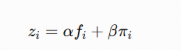
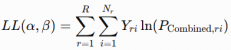
The mathematics at best are high school level and involve combining a) the logit transformed probabilities of a fundamental model with b) the betting public's estimation or "market" (again transformed as logits). Optimising both for the correct weighting is usually done by maximising the log likelihood function over a set of past and also hold out races. Benter discusses the process in his seminal paper but the origins of the idea is as old as the hills and has it's roots in physics and statistical mechanics and is known as the "softmax function" - combining two or more probability distributions is nothing new.
Was probably an elementary step for Benter given that the choice of model by those HK pioneers was logistic regression, later upgrading to probit type regression. The mainly Bayesian "state space" models used mostly nowadays by syndicates would make the Benter's/Woods & Bob Moore type models seem very rudimentary. That's not to say Benter was not a genius - it's rumoured that his latter probit models in the early 90's in HK had 14 different "jockey" auxiallary models each with up to 15 variables. I also have a rare Benter paper where he puts forward a very elegant solution to modelling "distance preferance" in thoroughbreds using a least-squares parabolic curve fitting method involving Hill-Keller's "optimal running" theory and the use of mathematical Tack Points and Biezer Curves.

The basic mathematics

logit transformation
runner logit transformation.png
then becomes

Screenshot 2026-10-02 162117.png

combined using the exponential distribution and normalised

Expanded .png

Log Likelihood function then maximised on past/hold out races
at that time the model of choice was logistic regression where 1 = winner and 0 = otherwise

logistic reg.png

Benter moving to Probit meant that he could condition on say "normalised finishing position" or "target speed rating" rather than the binary outcome of winner/otherwise.


some rare(ish) Benter

Benter1.png
Benter2.png

Benter3.png
 
Last edited:
What your describing here O Outlander was once seen as "state of the art" in the syndicate betting world but has now become par for the course.
The mathematics at best are high school level and involve combining a) the logit transformed probabilities of a fundamental model with b) the betting public's estimation or "market" (again transformed as logits). Optimising both for the correct weighting is usually done by maximising the log likelihood function over a set of past and also hold out races. Benter discusses the process in his seminal paper but the origins of the idea is as old as the hills and has it's roots in physics and statistical mechanics and is known as the "softmax function" - combining two or more probability distributions is nothing new.
Was probably an elementary step for Benter given that the choice of model by those HK pioneers was logistic regression, later upgrading to probit type regression. The mainly Bayesian "state space" models used mostly nowadays by syndicates would make the Benter's/Woods & Bob Moore type models seem very rudimentary. That's not to say Benter was not a genius - it's rumoured that his latter probit models in the early 90's in HK had 14 different "jockey" auxiallary models each with up to 15 variables. I also have a rare Benter paper where he puts forward a very elegant solution to modelling "distance preferance" in thoroughbreds using a least-squares parabolic curve fitting method involving Hill-Keller's "optimal running" theory and the use of mathematical Tack Points and Biezer Curves.

The basic mathematics

logit transformation
View attachment 172111
then becomes

View attachment 172112

combined using the exponential distribution and normalised

View attachment 172113

Log Likelihood function then maximised on past/hold out races
at that time the model of choice was logistic regression where 1 = winner and 0 = otherwise

View attachment 172114

Benter moving to Probit meant that he could condition on say "normalised finishing position" or "target speed rating" rather than the binary outcome of winner/otherwise.


some rare(ish) Benter

View attachment 172115
View attachment 172116

View attachment 172117
Still works today
 
I usually only ban spammers when they attempt to join or those that appear to want more then one username.
As has been suggested earlier in this thread the forum has an ignore feature which can be useful if you don't want to see what a particular member is posting. If reading other members posts wind you up then "ignore" them and enjoy the rest of the forum.
 
I usually only ban spammers when they attempt to join or those that appear to want more then one username.
As has been suggested earlier in this thread the forum has an ignore feature which can be useful if you don't want to see what a particular member is posting. If reading other members posts wind you up then "ignore" them and enjoy the rest of the forum.
and what about abusive language
 
What your describing here O Outlander was once seen as "state of the art" in the syndicate betting world but has now become par for the course.
The mathematics at best are high school level and involve combining a) the logit transformed probabilities of a fundamental model with b) the betting public's estimation or "market" (again transformed as logits). Optimising both for the correct weighting is usually done by maximising the log likelihood function over a set of past and also hold out races. Benter discusses the process in his seminal paper but the origins of the idea is as old as the hills and has it's roots in physics and statistical mechanics and is known as the "softmax function" - combining two or more probability distributions is nothing new.
Was probably an elementary step for Benter given that the choice of model by those HK pioneers was logistic regression, later upgrading to probit type regression. The mainly Bayesian "state space" models used mostly nowadays by syndicates would make the Benter's/Woods & Bob Moore type models seem very rudimentary. That's not to say Benter was not a genius - it's rumoured that his latter probit models in the early 90's in HK had 14 different "jockey" auxiallary models each with up to 15 variables. I also have a rare Benter paper where he puts forward a very elegant solution to modelling "distance preferance" in thoroughbreds using a least-squares parabolic curve fitting method involving Hill-Keller's "optimal running" theory and the use of mathematical Tack Points and Biezer Curves.

The basic mathematics

logit transformation
View attachment 172111
then becomes

View attachment 172112

combined using the exponential distribution and normalised

View attachment 172113

Log Likelihood function then maximised on past/hold out races
at that time the model of choice was logistic regression where 1 = winner and 0 = otherwise

View attachment 172114

Benter moving to Probit meant that he could condition on say "normalised finishing position" or "target speed rating" rather than the binary outcome of winner/otherwise.


some rare(ish) Benter

View attachment 172115
View attachment 172116

View attachment 172117
What your describing here O Outlander was once seen as "state of the art" in the syndicate betting world but has now become par for the course.
The mathematics at best are high school level and involve combining a) the logit transformed probabilities of a fundamental model with b) the betting public's estimation or "market" (again transformed as logits). Optimising both for the correct weighting is usually done by maximising the log likelihood function over a set of past and also hold out races. Benter discusses the process in his seminal paper but the origins of the idea is as old as the hills and has it's roots in physics and statistical mechanics and is known as the "softmax function" - combining two or more probability distributions is nothing new.
Was probably an elementary step for Benter given that the choice of model by those HK pioneers was logistic regression, later upgrading to probit type regression. The mainly Bayesian "state space" models used mostly nowadays by syndicates would make the Benter's/Woods & Bob Moore type models seem very rudimentary. That's not to say Benter was not a genius - it's rumoured that his latter probit models in the early 90's in HK had 14 different "jockey" auxiallary models each with up to 15 variables. I also have a rare Benter paper where he puts forward a very elegant solution to modelling "distance preferance" in thoroughbreds using a least-squares parabolic curve fitting method involving Hill-Keller's "optimal running" theory and the use of mathematical Tack Points and Biezer Curves.

The basic mathematics

logit transformation
View attachment 172111
then becomes

View attachment 172112

combined using the exponential distribution and normalised

View attachment 172113

Log Likelihood function then maximised on past/hold out races
at that time the model of choice was logistic regression where 1 = winner and 0 = otherwise

View attachment 172114

Benter moving to Probit meant that he could condition on say "normalised finishing position" or "target speed rating" rather than the binary outcome of winner/otherwise.


some rare(ish) Benter

View attachment 172115
View attachment 172116

View attachment 172117
Thanks, that’s really helpful.
I’m definitely not claiming to have invented anything new or state of the art. I’m building this in stages and trying to make sure each part stands up before I combine everything.
At the moment I’m treating the trainer percentage as a trainer-strength signal, not as the final tissue price for the horse. The next stage I had in mind was to test it on the 2026 results and see whether the percentages are calibrated, too compact, or too stretched.
So I’ll be looking at trainer model rank, trainer percentage bands, actual win/place rates, SP/BFSP returns, and how the Bet365 price moves from evening to morning. That should tell me whether the market already has most of it covered, or whether there is still something useful in the trainer signal.
Your point about combining my model with the market properly, rather than just using a rough weighting, makes sense. I’m not at that stage yet, but I can see that is the right direction once the individual signals have been tested.
So thanks — I appreciate the explanation. The aim is to prove the trainer/form/pace signals separately first, then look at the proper way of blending them with the market.

 
Com
Thanks, that’s really helpful.
I’m definitely not claiming to have invented anything new or state of the art. I’m building this in stages and trying to make sure each part stands up before I combine everything.
At the moment I’m treating the trainer percentage as a trainer-strength signal, not as the final tissue price for the horse. The next stage I had in mind was to test it on the 2026 results and see whether the percentages are calibrated, too compact, or too stretched.
So I’ll be looking at trainer model rank, trainer percentage bands, actual win/place rates, SP/BFSP returns, and how the Bet365 price moves from evening to morning. That should tell me whether the market already has most of it covered, or whether there is still something useful in the trainer signal.
Your point about combining my model with the market properly, rather than just using a rough weighting, makes sense. I’m not at that stage yet, but I can see that is the right direction once the individual signals have been tested.
So thanks — I appreciate the explanation. The aim is to prove the trainer/form/pace signals separately first, then look at the proper way of blending them with the market.

Combine them using regression but dont normalize the fundamental (ie your trainer prob's) at stage 1
 
Com

Combine them using regression but dont normalize the fundamental (ie your trainer prob's) at stage 1
Thanks, that makes sense.

So rather than treating the trainer percentage as a finished tissue price, I should keep it as a raw trainer-strength signal at the first stage.

Then the next step is to combine that signal with the other factors — form rating, pace/draw/setup, market price and price movement — and let the regression work out how much weight each part deserves.

That also avoids me manually stretching or compressing the trainer percentages too early. The important test is whether the trainer signal adds value once it is combined properly with the market and the other race factors.

So I take your point as:

Stage 1: keep the trainer/fundamental signal raw
Stage 2: combine it with the market and other signals using regression
Stage 3: calibrate/normalise the final race probabilities after that
That is very helpful and gives me a clearer route for the 2026 testing.
 
Thanks, that makes sense.

So rather than treating the trainer percentage as a finished tissue price, I should keep it as a raw trainer-strength signal at the first stage.

Then the next step is to combine that signal with the other factors — form rating, pace/draw/setup, market price and price movement — and let the regression work out how much weight each part deserves.

That also avoids me manually stretching or compressing the trainer percentages too early. The important test is whether the trainer signal adds value once it is combined properly with the market and the other race factors.

So I take your point as:

Stage 1: keep the trainer/fundamental signal raw
Stage 2: combine it with the market and other signals using regression
Stage 3: calibrate/normalise the final race probabilities after that
That is very helpful and gives me a clearer route for the 2026 testing.
Yes
 
Thanks, that makes sense.

So rather than treating the trainer percentage as a finished tissue price, I should keep it as a raw trainer-strength signal at the first stage.

Then the next step is to combine that signal with the other factors — form rating, pace/draw/setup, market price and price movement — and let the regression work out how much weight each part deserves.

That also avoids me manually stretching or compressing the trainer percentages too early. The important test is whether the trainer signal adds value once it is combined properly with the market and the other race factors.

So I take your point as:

Stage 1: keep the trainer/fundamental signal raw
Stage 2: combine it with the market and other signals using regression
Stage 3: calibrate/normalise the final race probabilities after that
That is very helpful and gives me a clearer route for the 2026 testing.
Dont forget to natural log them before stage 2
 
Back
Top