JennyK
Gelding
My Excel application is based around the three VDW elements - class, form and "the other factors" (which I assume means conditions such as going, trip etc) - but in part with different ways of assessing both class and form.
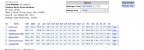
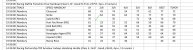
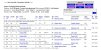
As a test, I have added a new sheet to the application which uses what I think is the most detailed description of his method VDW gave us, that of the 1988 Mackeson won by Pegwell Bay. That illustration builds on what he described as the "first numerical picture" and set out a second, which can help pick up horses coming from higher class races who are not necessarily one of the consistent horses. I think he had a third numerical picture, too, those from the second numerical picture whom he regarded as form horses.
Presumably VDW then assessed the horses in the third numerical picture against "the other factors" (which seem to have eliminated Jim Thorpe in the Mackeson example) and the quality of the form (which I think eliminated the higher ability-rated form horse, Balmers Coombe, making Wild Gamble the class/form horse in his "Spells It All Out" article) to arrive at his class/form horse, the un-eliminated horse from the third numerical picture with the highest ability rating.
For the races I look at, always handicaps, mostly sprints, I thought I would post the VDW class/form horses found using my understanding of his Mackeson approach. Of these, and assuming I've understood the Mackeson approach properly, presumably he would not have regarded 80% or more as strong enough to back, given that he wrote "I would estimate that I wager on less than 20 per cent of horses consider potential winners.
Today:
5.30 Thirsk. Law Of Average
7.10 Windsor. Equity Law
I see them as likely to be in the 80%+ of class/form horses VDW would not have regarded as strong enough to back, but obviously no way of being sure.
As a test, I have added a new sheet to the application which uses what I think is the most detailed description of his method VDW gave us, that of the 1988 Mackeson won by Pegwell Bay. That illustration builds on what he described as the "first numerical picture" and set out a second, which can help pick up horses coming from higher class races who are not necessarily one of the consistent horses. I think he had a third numerical picture, too, those from the second numerical picture whom he regarded as form horses.
Presumably VDW then assessed the horses in the third numerical picture against "the other factors" (which seem to have eliminated Jim Thorpe in the Mackeson example) and the quality of the form (which I think eliminated the higher ability-rated form horse, Balmers Coombe, making Wild Gamble the class/form horse in his "Spells It All Out" article) to arrive at his class/form horse, the un-eliminated horse from the third numerical picture with the highest ability rating.
For the races I look at, always handicaps, mostly sprints, I thought I would post the VDW class/form horses found using my understanding of his Mackeson approach. Of these, and assuming I've understood the Mackeson approach properly, presumably he would not have regarded 80% or more as strong enough to back, given that he wrote "I would estimate that I wager on less than 20 per cent of horses consider potential winners.
Today:
5.30 Thirsk. Law Of Average
7.10 Windsor. Equity Law
I see them as likely to be in the 80%+ of class/form horses VDW would not have regarded as strong enough to back, but obviously no way of being sure.