• Hi Guest Just in case you were not aware I wanted to highlight that you can now get a free 7 day trial of Horseracebase here.
    We have a lot of members who are existing users of Horseracebase so help is always available if needed, as well as dedicated section of the fourm here.
    Best Wishes
    AR

80/20 Rule

Just came across this, never seen it before, just thought I'd mention it.

To help combat some of those feelings of uncertainty and regret, you can deploy the 80/20 rule in your betting to provide a simple, concrete system to deploy when backing any horse. The strategy is simple: you place 80% of your stake on the horse to place, and the remaining 20% on them to win on the nose.
 
Just came across this, never seen it before, just thought I'd mention it.

To help combat some of those feelings of uncertainty and regret, you can deploy the 80/20 rule in your betting to provide a simple, concrete system to deploy when backing any horse. The strategy is simple: you place 80% of your stake on the horse to place, and the remaining 20% on them to win on the nose.

(y)

If you want a staking spreadsheet for 20/80, I'll dig one out for you.
 
My usual bet and employed by many on here. It's known correctly as the 20/80 or win/loaded place
"Pareto" distribution also known as a "Power-Law" - applies to many aspects of racing (and life lol)
eg - 20% of trainers/jockeys/sires win around 80% of races , ok the distribution might not be "exactly that" as in 20/80 but as with most Power-Laws it works out pretty damn close

Pareto and it's distribution is very closely related to other power-law's - "Zipfs Law" & "Benfords Law"- which also has relevance to horse racing
Zipfs teaches that in most "rank" ordered data, frequency is inversely proportional to the order of "rank"
Handicappers use Zipf's Law and mattrices to fit a set of outcomes (ratings) to a race
Horse race betting markets assume a Benfords Law type distribution when horses are ordered by terms as "favourite" , "2nd favourite" and so on.

From Timeform's internal handicapping policy

Race standardisation evaluates the “repeatability” of form for a specific race or type of race – the degree to which the race strength is similar from one year to the next – and adjusts for things like race time, field size and margins between horses, then applies this to the race now under consideration.
At Timeform, we use a weighting known as “Zipf’s Law”, whereby the rating of each qualifying horse is divided by its finishing position, so that winners are accorded more significance than seconds, seconds more than thirds, and so on.
This is better than a flat unweighted average of the first four, first five, or using some arbitrary number.

Benford's Law and rank ordered SP positions (Fav, 2nd Fav, 3rd Fav etc) - not exact but very close

Benfords Law Stakes.jpg
 
Leodis Leodis. Interesting that 20/80 is your usual staking approach and reading the posts on Gummy and a blog here it is clearly well favoured by others.

For me the question is purpose. An unorthodox but interesting VDWer, Mtoto, seems from Gummy posts and his blog here to have used the loaded place staking, but often on quite long-priced selections so my assumption would be he did so not for insurance but to make a significant profit. When I add a place element to a win bet, it is simply for insurance, so I have just enough on the place bet to cover the win stake.

The race I've looked at today, 6.40 Kempton, poses a problem for me, staking-wise.

Kosometsuke looks a worthy forecast favourite, and solid to me, the only question mark being the usual one with progressive 3yos, will the progression plateau for a while? (On my performance ratings K has improved on very run this year, which is not very common when horses have run more than two or three times.)

Leaving aside the others who might win, should they return to their best, of whom the most interesting is Al Barez, because of when his best performances have hitherto been achieved, the obvious fly in the ointment is Grey Jaguar, having his first handicap run after two non-handicap wins as favourite.

With Grey Jaguar the only other VDW form horse in the field but below K on both ability ratings, he is alas an unknown quantity on my check performance ratings (which only cover handicaps) and I am insufficiently confident for a straight win bet on K, though I see him as the most probable winner. But how to insure? Saving on Grey Jaguar is a feasible option but of no use if Al Barez returns to form unseasonably or one of the others pips K. My more usual approach would, at current prices, mean more on a place bet on K than on the win bet; not four times as much as with a 20/80, but definitely more loaded than 50/50.

I think that maybe if I were regularly backing horses as short as K seems likely to be today a 20/80 approach would pay well over time. But as a one-off the risk/reward of even a 50/50 approach doesn't feel right. My conclusion in the specific circumstances is to hope that K's price eases by race time so that place cover costs significantly less than what I would like to stake on K to win. If not, another likely winner will pass unbacked.
 
Hi JennyK JennyK ,

The 20/80 bet is designed, purely for the reason that a good horse will more than likely place in the first 2/3 and more often than win, so it makes sense to have a larger sum on the place part. I guess you can change the % depending on your level of confidence. 30/70 for instance.

As a rule, I will make a 20/80 if the place pays at least 2.0. Otherwise, it will be a straight win @20%

Regards
 
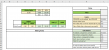
£20 Bet - @ 20.80: Split £4 Win & £16 Place.
Losing bet.

1759920585349.png

---

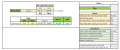
£20 Bet - @ 20.80 Split £4 Win & £16 Place.
Place part successful @ 2.00, win part lost.
Nett £12.00 profit. Overall Odds for the whole bet = 1.60

1759920649643.png

----

£20 Bet - @ 20.80 Split £4 Win & £16 Place.
Win part successful @ 4.50 Place part successful @ 2.00
Nett £30.00 profit. Overall Odds for the whole bet = 2.50

1759920910220.png

---


The inputs for F4 & G4 can be changed before placing a bet to any split required, as can the whole stake in D5.
Inputs for D11 & E11 are dependent if the win or win/place parts were successful and what odds were achieved.

----

New sheet to follow.

---
 
Last edited:
£20 Bet - @ 20.80: Split £4 Win & £16 Place.
Losing bet.

View attachment 160819

---

£20 Bet - @ 20.80 Split £4 Win & £16 Place.
Place part successful @ 2.00, win part lost.
Nett £12.00 profit. Overall Odds for the whole bet = 1.60

View attachment 160820

----

£20 Bet - @ 20.80 Split £4 Win & £16 Place.
Win part successful @ 4.50 Place part successful @ 2.00
Nett £30.00 profit. Overall Odds for the whole bet = 2.50

View attachment 160821

---


The inputs for F4 & G4 can be changed before placing a bet to any split required, as can the whole stake in D5.
Inputs for D11 & E11 are dependent if the win or win/place parts were successful and what odds were achieved.

----

Attached sheet below.

---
Makes no sense, using a constant of 80/20 WILL either overstake or understake on either side of the place or the win part of the bet UNLESS the odds of the WIN/PLACE stake ratio is exactly 80/20 or 4.00 (80/20=4.00)
Why should /would you over or under stake in either the win part or the place part - the odds obtained within each should determine the ratio of the stakes?? Might not seem much over 1 or 2 bets but keep on doing it over an extended series of bets and you'll see the effect as results WILL normalise.
Why just constantly stake 4 times more on the place part of the bet when you should only do that if the odds taken dictate.

Take your example DuckandDive DuckandDive with Win Odds of 4.5 and Place Odds of 2.0 - the ratio here is ( 4.5/2.0) = 2.25 - the odds are dictating that you should have 2.25 times more on the place part of the bet - not 4 times more - so for a 20.00 point total stake you should have 6.15 points on the 4.5 win part of the bet and (20-6.15)=13.85 points on the 2.0 place part of the bet - much more EFFICIENT in terms of chance/outcome - if both happen then total odds returned are 2.77. Your "NETT" is 35.37 - 5.37 points more than in the example that returns 50 points (NETT - 30.00)
Over an extended series of bets THIS STUFF MATTERS.
I know somebody will come back and say that using a constant of 80/20 returns more on the place - if so their not understanding that horses DON'T place 4 times more than what their win odds dictate they should.
Staking should have an element of "efficiency" - it's just common sense - "managing your money"

There is a VERY GOOD reason that place odds in horse racing markets DONT have a constant ratio of 4.0 in comparison to the horses win chance.

Some might see it as one of these "rule of thumb" shortcuts again - this is gambling peeps, there is no room for shortcuts that leave money on the table, winning and managing your money is hard enough especially these days. This stuff is easily calculated in a spreadsheet or with a pocket calculator.
 
Last edited:
Leodis Leodis, DuckandDive DuckandDive and ARAZI91 ARAZI91

Thank you. Three very helpful posts on a point to which I have given too little attention.

The situation in the 6.40 Kempton has changed with Grey Jaguar a non runner. If one did want to back the favourite win and place at the current Betair odds of 3.5 win, 1.64 for (3) places, the ratio Arazi191 advises would be 2.5/0.64, or around 3.9 so in this specific case 20/80 would be about right. I must say that seems a very logical way of approaching the win/place allocations.

I think the current 3.5 for Kosometsuke to win is not unfair, though for me it offers little "fat" for the two risks - K's progression pausing for a while, one of the others returning to form. Sometimes favourites lengthen a bit on Betfair in the last minutes before the off, and should K slip a bit over 4.0, I'll certainly back him.

Thanks again.
 
Leodis Leodis, DuckandDive DuckandDive and ARAZI91 ARAZI91

Thank you. Three very helpful posts on a point to which I have given too little attention.

The situation in the 6.40 Kempton has changed with Grey Jaguar a non runner. If one did want to back the favourite win and place at the current Betair odds of 3.5 win, 1.64 for (3) places, the ratio Arazi191 advises would be 2.5/0.64, or around 3.9 so in this specific case 20/80 would be about right. I must say that seems a very logical way of approaching the win/place allocations.

I think the current 3.5 for Kosometsuke to win is not unfair, though for me it offers little "fat" for the two risks - K's progression pausing for a while, one of the others returning to form. Sometimes favourites lengthen a bit on Betfair in the last minutes before the off, and should K slip a bit over 4.0, I'll certainly back him.

Thanks again.
JennyK JennyK
Your deducting 1 from what is already decimal expressions of odds AND chance ??
Why ??
yes 2.5/0.64 = 3.9
BUT
3.5/1.64 = 2.13
as integers get larger in division the "whole" gets smaller
the ratio should be 1.83 times LESS (3.9/1.83=2.13)
"mucho differencia" as Pablo Escobar used to say when counting his money

a 3.5 chance on the exchange is expressed as 0.28571 in terms of chance or 28.57% rounded
your saying that it has a 0.11429 MORE of a chance or exactly 0.40000
Fractional/Decimal confusion ??
 
Last edited:
Confusion, certainly, but I think I see why, ARAZI91 ARAZI91. I was working out what staking would produce an equal return from both sides of the bet.

At 3.5 in the win market, for every £10 I'd potentially win £25.

In the place market for every £10 at 1.65 I'd be potentially winning about £6.50

In both, ignoring for current purposes commission.

Thus I'd need to put nearly four times on to place than to win to get the same potential profit from each.

But I missed your point, because if I understand correctly you are focusing on a quite different idea, how by using market's prices most efficiently to split the total proposed stake. At the 3.5 and 1.65 prices, you are suggesting 2.13 times whatever one puts on the win market would go on the place market, so whatever sum one was laying out, it would be a question of dividing by 3.13 with the product the win bet and the rest the place bet.

I do hope I've got it right this time.
 
Confusion, certainly, but I think I see why, ARAZI91 ARAZI91. I was working out what staking would produce an equal return from both sides of the bet.

At 3.5 in the win market, for every £10 I'd potentially win £25.

In the place market for every £10 at 1.65 I'd be potentially winning about £6.50

In both, ignoring for current purposes commission.

Thus I'd need to put nearly four times on to place than to win to get the same potential profit from each.

But I missed your point, because if I understand correctly you are focusing on a quite different idea, how by using market's prices most efficiently to split the total proposed stake. At the 3.5 and 1.65 prices, you are suggesting 2.13 times whatever one puts on the win market would go on the place market, so whatever sum one was laying out, it would be a question of dividing by 3.13 with the product the win bet and the rest the place bet.

I do hope I've got it right this time.
Cooking with gas now (y) JennyK JennyK
 
ARAZI91 ARAZI91

Thanks.

It has been a good day for me, learning-wise. In addition to what I've learned from you, Leodis Leodis and DuckandDive DuckandDive, a breakdown recovery mechanic explained exactly why I managed to drain my car battery just by sitting in it for an hour with the window down, that the battery could still have some life in it without having enough to crank the engine, and how a gismo I'd bought to get me out of such trouble works perfectly when used properly.

If only every day were as profitable.
 
Back
Top